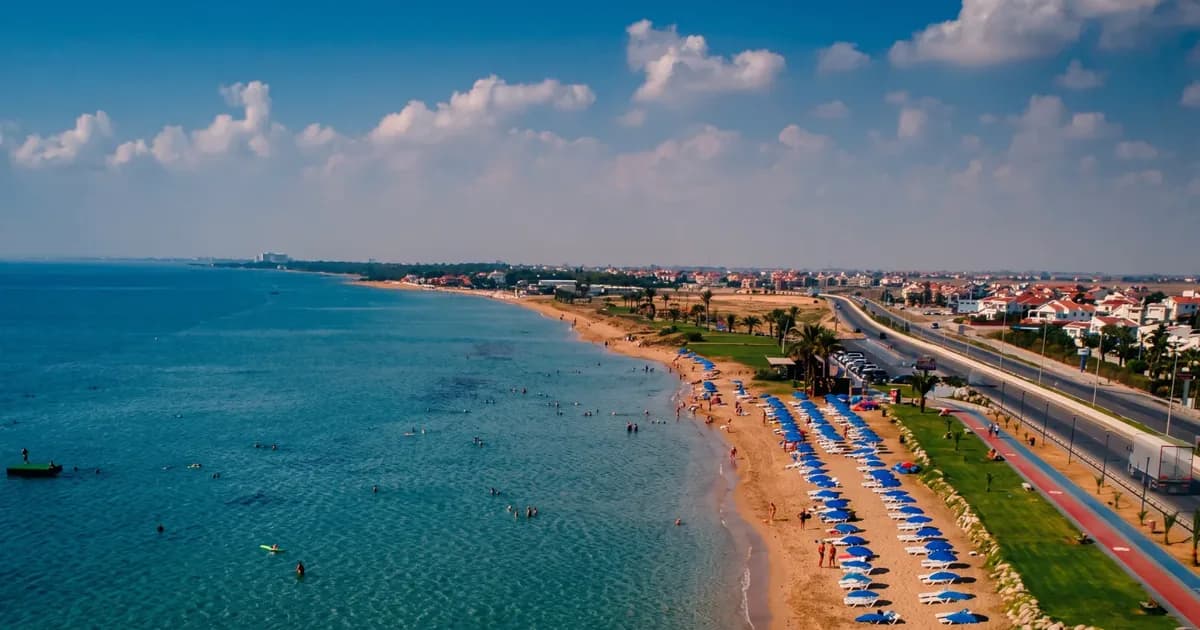


For two decades, Dubai has symbolized ambition, luxury, and sky-high returns in global real estate. But as its market matures, smart investors are exploring new frontiers — and many now see Northern Cyprus as the next big opportunity. This guide compares the two markets side by side, revealing where your investment in 2025 can deliver stronger ROI, better value, and long-term growth.
The Evolution of Two Markets
For more than two decades, Dubai’s real estate market has been the symbol of ambition and innovation in the Middle East. The city’s transformation from desert dunes to futuristic skylines began in the early 2000s, when freehold laws opened the door for foreign buyers. This policy shift, combined with world-class infrastructure and a tax-free investment environment, attracted global attention from high-net-worth individuals and corporations.
However, by 2025, Dubai’s market has matured. While it remains stable and profitable, entry costs are high and opportunities for exponential growth have narrowed. Prices in key areas like Palm Jumeirah and Downtown Dubai often exceed $10,000 per square meter, placing it out of reach for many new investors.
Meanwhile, Northern Cyprus real estate is following a similar trajectory to Dubai’s early days — but at a far more accessible stage. The island is currently experiencing rapid infrastructure expansion, government incentives for foreigners, and rising international visibility. With property prices averaging between $1,200 and $2,000 per square meter, the market offers early-stage growth potential that Dubai had two decades ago.
As investors often say, “First in, first out.” Those who recognize emerging markets early typically enjoy lower costs and higher long-term returns — and Northern Cyprus may be today what Dubai was in 2004.
Property Prices and Entry Costs
In Dubai, the average property price in 2025 ranges between $3,500 and $6,000 per square meter, depending on the location. Premium districts such as Palm Jumeirah, Downtown Dubai, and Business Bay often exceed $10,000 per square meter, making entry into the market challenging for new investors.
By contrast, Northern Cyprus real estate remains far more affordable, with prices averaging between $1,200 and $2,000 per square meter. Even in high-demand coastal areas like Iskele or Kyrenia, prices rarely go beyond $3,000 per square meter.
This difference defines not only affordability but also investment accessibility. For the cost of a one-bedroom apartment in Dubai, an investor could own a seaside villa or two modern apartments in Northern Cyprus. Such price flexibility attracts both small-scale investors and international buyers seeking higher returns with lower financial exposure.
Because of its lower entry threshold, Northern Cyprus property investment is becoming increasingly appealing to those who missed Dubai’s early boom. As more developers and foreign investors enter the market, prices are expected to rise steadily — offering an ideal window for those aiming to invest before it reaches European averages.
Return on Investment (ROI) and Rental Yields
Dubai continues to deliver consistent rental returns, averaging between 6% and 8% annually. Areas like Dubai Marina, Downtown Dubai, and Business Bay remain attractive to investors thanks to high tourism and expat demand. However, management fees, maintenance costs, and market saturation often reduce the overall net yield for landlords.
In contrast, Northern Cyprus real estate currently offers 8%–12% average rental yields, supported by growing international tourism, affordable housing prices, and low taxation. The island’s economy benefits from a steady influx of students, retirees, and remote workers, ensuring both short-term and long-term rental demand.
Average Rental Yields Comparison (2025)
| Location | Average Property Price (per m²) | Annual Rental Yield | Market Characteristics |
|---|---|---|---|
| Dubai | $3,500 – $6,000 | 6% – 8% | High competition, mature market, higher costs |
| Northern Cyprus | $1,200 – $2,000 | 8% – 12% | Emerging market, lower taxes, strong tourism demand |
Why Northern Cyprus Outperforms in ROI
- Lower entry costs: Investors can start with $100,000–$150,000 instead of Dubai’s $500,000+ minimum for prime zones.
- Lower maintenance and service charges: Less bureaucracy and fewer hidden fees.
- Diversified rental market: Demand from tourists, expats, and university students ensures stable year-round occupancy.
- High capital appreciation: Properties purchased 3–4 years ago have already increased by up to 40% in value.
- Minimal taxation: No capital gains tax for foreigners and simple ownership transfers.
Overall, Northern Cyprus stands out as one of the few remaining high-yield real estate markets in Europe and the Mediterranean. With affordable entry points and rising international recognition, it offers an ideal balance of growth potential and rental income stability.
Lifestyle and Quality of Life
When it comes to lifestyle, Dubai and Northern Cyprus offer two very different experiences — both appealing, but suited to different types of investors and residents. Dubai represents luxury, ambition, and innovation, while Northern Cyprus offers a peaceful, Mediterranean lifestyle rooted in nature, community, and affordability.
Dubai: Luxury and Fast-Paced Living
- World-class amenities: Iconic malls, international restaurants, and state-of-the-art healthcare facilities.
- Vibrant social scene: Active nightlife, luxury events, and a diverse expat community.
- High cost of living: Rent, schooling, and utilities among the most expensive in the region.
- Fast-paced environment: Ideal for entrepreneurs and professionals but less suited for retirees or families seeking calm.
Northern Cyprus: Serenity and Balance
- Natural beauty: Pristine beaches, green mountains, and turquoise waters offering a relaxed Mediterranean charm.
- Affordable lifestyle: Cost of living is 40–60% lower than Dubai, including property, groceries, and services.
- Safe and family-friendly: Low crime rates, friendly locals, and a close-knit expat community.
- Ideal for remote workers and retirees: Peaceful environment with growing infrastructure and modern conveniences.
Dubai vs Northern Cyprus Lifestyle Comparison
| Aspect | Dubai | Northern Cyprus |
|---|---|---|
| Cost of Living | High (Premium housing and services) | Low to Moderate (Affordable for expats) |
| Environment | Urban, fast-paced, modern | Natural, peaceful, slower pace |
| Safety | Very safe with strict regulations | Extremely safe, low crime rate |
| Climate | Desert heat (very hot summers) | Mediterranean (mild winters, warm summers) |
| Ideal For | Business professionals, entrepreneurs | Families, retirees, remote workers |
Verdict
If you prefer an energetic, business-driven lifestyle with global networking opportunities, Dubai remains unmatched. But if your goal is to enjoy a relaxed, affordable, and scenic environment with long-term property value appreciation, Northern Cyprus offers a quality of life that few destinations can rival.
Market Maturity and Growth Stage
Every real estate market follows a predictable cycle — from emergence to growth, maturity, and eventually saturation. Understanding where a region stands in this cycle is essential for investors aiming to enter at the right time. In 2025, Dubai and Northern Cyprus sit at opposite ends of this curve.
Dubai: A Mature Market
- Established infrastructure and global reputation: Dubai has already gone through its major development boom.
- Stable but slower growth: The market offers security but limited opportunities for exponential returns.
- High entry costs: Premium pricing makes it challenging for small investors to enter.
- Strong rental demand: Consistent yields due to tourism and corporate presence, but limited room for appreciation.
Northern Cyprus: An Emerging Growth Phase
- Rapid infrastructure development: New roads, international schools, and residential projects are reshaping the island.
- Rising foreign investment: Buyers from Europe, the Middle East, and Asia are increasingly entering the market.
- High capital growth potential: Property values have risen up to 40% in the last few years — yet remain below EU averages.
- Early-stage momentum: Similar to Dubai’s market during the early 2000s.
Market Life Cycle Comparison
| Market Stage | Dubai | Northern Cyprus |
|---|---|---|
| Emerging | Completed (Early 2000s) | Current Phase |
| Growth | Mid-2000s to 2015 | Accelerating (2022–Present) |
| Maturity | Now — Stable, competitive, expensive | Expected in 5–8 years |
| Saturation | Future risk — limited new demand | Not applicable — still expanding |
Investor Insight
Dubai represents a secure, established market — ideal for portfolio diversification but limited in high-growth potential. Northern Cyprus, on the other hand, is in the exciting early stages of expansion, offering investors a rare chance to enter before the mainstream wave. The opportunity to capture both capital appreciation and strong rental yields makes it one of the most attractive emerging real estate markets in 2025.
Residency and Ownership Laws
One of the key factors driving property investment decisions is how easily foreigners can buy, own, and live in the country. Both Dubai and Northern Cyprus have established systems that attract international investors — but the entry requirements and benefits differ significantly.
Dubai: High Entry Threshold for Residency
- Golden Visa Program: Requires a minimum property investment of around $750,000 USD.
- Ownership rights: Full freehold ownership allowed only in designated areas for foreign nationals.
- Residency duration: Golden Visa valid for 5 or 10 years, depending on investment value.
- Additional costs: High registration fees, service charges, and strict property valuation rules apply.
Northern Cyprus: Simple, Low-Cost Residency
- Property-based residency: Available for real estate purchases starting from just $100,000 USD.
- Multiple property ownership: As of 2024, foreigners can own several properties under one name.
- Residency permits: 5-year renewable residency available for property owners.
- Straightforward process: Minimal bureaucracy, no annual wealth tax, and lower legal costs.
Residency & Ownership Comparison (2025)
| Criteria | Dubai (UAE) | Northern Cyprus (TRNC) |
|---|---|---|
| Minimum Investment for Residency | $750,000+ | $100,000+ |
| Ownership Type | Freehold (in designated zones) | Full ownership permitted |
| Residency Duration | 5–10 years (Golden Visa) | 5 years, renewable |
| Taxation | No income tax, but new corporate and service fees apply | No capital gains tax for foreign investors |
| Ease of Application | Moderate – requires valuation and background checks | Simple – direct approval after property purchase |
Investor Takeaway
While Dubai remains attractive for investors with significant capital, Northern Cyprus offers a far more accessible path to property ownership and long-term residency. The new regulations introduced in 2024 made it easier for foreigners to invest, own multiple units, and qualify for residency with minimal red tape — a policy shift reminiscent of Dubai’s freehold law two decades ago.
Taxation and Financial Environment
For global investors, understanding the taxation landscape is crucial when comparing Dubai vs Northern Cyprus real estate. Both markets promote investor-friendly policies, but Northern Cyprus currently provides a more simplified and cost-efficient environment for long-term property ownership.
Dubai: Low Tax, But Growing Complexity
- Tax-free reputation: Historically, Dubai attracted investors with zero income or property tax.
- Corporate tax introduced: A 9% corporate tax was implemented for businesses in 2023, signaling a gradual policy shift.
- Transaction costs: Property registration fees typically range from 4–5% of the property value.
- Service and maintenance fees: High annual community and service charges for freehold properties.
Northern Cyprus: Simplified and Cost-Effective
- No capital gains tax for foreign buyers: Profits from property sales remain untaxed for international investors.
- Low annual property tax: Between 0.1% and 0.2% depending on size and location.
- Affordable transfer fees: One-time title deed transfer fee of around 3%–6%.
- Simple legal process: Minimal bureaucracy and transparent financial regulations encourage international investment.
Taxation Comparison (2025)
| Tax / Fee Type | Dubai (UAE) | Northern Cyprus (TRNC) |
|---|---|---|
| Income Tax | None | None |
| Corporate Tax | 9% (since 2023) | Not applicable for individuals |
| Capital Gains Tax | Varies for residents; none for most foreign investors | 0% for foreign investors |
| Annual Property Tax | 0.5% – 0.8% | 0.1% – 0.2% |
| Transfer / Registration Fees | 4% – 5% | 3% – 6% |
| Maintenance & Community Fees | High – especially in luxury developments | Low to moderate |
Investor Perspective
While Dubai remains a globally trusted financial hub, its recent tax introductions and higher service costs slightly reduce its appeal for mid-range investors. Northern Cyprus continues to offer one of the most tax-efficient real estate environments in the Mediterranean — combining low transaction fees, no capital gains tax, and minimal ownership costs.
Future Potential and Timing
In real estate, timing is everything. Both Dubai and Northern Cyprus have proven to be rewarding markets, but they stand at very different points in their investment journey. Understanding when to enter a market determines not only profitability but also the level of risk involved.
Dubai: Established and Stable, But Limited Upside
- Mature stage: Dubai’s explosive growth phase is over — its market now favors long-term capital holders over early-stage investors.
- Consistent returns: Investors can still achieve 6–8% rental yields, but price appreciation has slowed.
- High competition: Thousands of developers and agencies make it difficult to find undervalued opportunities.
- Best suited for: Institutional investors and luxury buyers seeking brand value and stable income.
Northern Cyprus: Entering the “First-In” Opportunity Window
- Early-stage market: Similar to Dubai in the early 2000s — rapid infrastructure growth, new international developers, and expanding tourism.
- High appreciation potential: Property values are expected to rise by 50–70% within the next decade as demand grows.
- Foreign investor momentum: Increasing attention from Europe, Russia, and the Middle East is driving construction and price growth.
- Best suited for: Investors seeking high ROI, long-term value growth, and affordable entry costs.
Market Timing Timeline (2000–2030)
| Year Range | Dubai Real Estate Stage | Northern Cyprus Real Estate Stage |
|---|---|---|
| 2000–2010 | Explosive growth phase – foreign ownership boom begins | Limited international exposure, early tourism growth |
| 2010–2020 | Market maturity and price stabilization | Emerging market – foreign universities and tourism expansion |
| 2020–2025 | High prices, stable yields, limited new entry points | Accelerated growth – infrastructure and residential projects surge |
| 2025–2030 (Forecast) | Gradual appreciation, luxury-focused development | Rapid appreciation and global recognition as a prime Mediterranean market |
Investor Outlook
Dubai will remain a symbol of wealth and stability, but its opportunities for aggressive growth are narrowing. Northern Cyprus, on the other hand, stands at the beginning of its transformation — offering a rare chance for investors to be early movers in a market on the rise. Those entering today are positioned to benefit from both capital appreciation and high rental yields over the coming decade.
The Verdict: The Next Chapter of Real Estate Investment
Comparing Dubai vs Northern Cyprus real estate isn’t about choosing one over the other — it’s about recognizing where each market stands in its journey. Dubai represents success, stability, and luxury, while Northern Cyprus embodies opportunity, growth, and accessibility.
Summary of Key Differences
| Category | Dubai | Northern Cyprus |
|---|---|---|
| Market Stage | Mature and stable | Emerging and rapidly growing |
| Average Property Price (per m²) | $3,500 – $10,000+ | $1,200 – $3,000 |
| Rental Yields | 6% – 8% | 8% – 12% |
| Residency Requirement | $750,000+ investment (Golden Visa) | $100,000+ investment (5-year renewable residency) |
| Taxation | New corporate tax, higher service fees | No capital gains tax, low annual property tax |
| Ideal Investor Type | Luxury and institutional investors | Early-stage and high-yield investors |
Conclusion
Real estate investment is always about timing, risk, and vision. Dubai remains a premium destination with global prestige — but its era of exponential growth has passed. Northern Cyprus, however, stands where Dubai once did: at the beginning of an exciting new chapter.
With affordable entry points, high rental yields, and a rapidly improving infrastructure, Northern Cyprus offers investors a unique opportunity to enter a rising Mediterranean market before it reaches full maturity. The combination of lifestyle, profitability, and stability makes it one of the most promising property destinations in 2025 and beyond.
As investors often say, “You make money when you buy, not when you sell.” Entering a promising market early — like Northern Cyprus today — can yield exceptional rewards tomorrow. The next real estate success story has already begun, and the smart investors are already moving.
If you want to know more about the market, our specialists are here to help you.
Contact our team to receive personalized guidance, property recommendations, and the latest market insights from Northern Cyprus.